Hast du einen Raspi PI 5 ?
Was sagt denn dmesg | grep “tty” ?
Hast du einen Raspi PI 5 ?
Was sagt denn dmesg | grep “tty” ?
enable_uart=1 in the config.txt file.dtoverlay=disable-bt to config.txt , /dev/serial0 will be linked to /dev/ttyAMA0, and /dev/serial1 will be linked to /dev/ttyS0.console=ttyAMA0,115200 in the cmdline.txt file and set dtparam=uart0=on in the config.txt file.console=ttyAMA10,115200 in the cmdline.txt file and ensure that the necessary configurations are set in config.txt .When working with serial ports on the Raspberry Pi 5, you need to be aware of the new UART connector and the changes in the symbolic links. If you are migrating from the Raspberry Pi 4, you may need to adjust your configurations to ensure compatibility. For detailed and up-to-date information, refer to the official Raspberry Pi documentation.
Hab einen 5er
Werde am Wochenende anfangen mir der Elektrik Neuzulegen ! Dann baue ich mal alles ein und Probier ich es!
Hallo Ihr alle 
ich bin auch dabei meine Tuma anzuschließen, ich hatte zuerst die ESP32 version von Magnus Christ laufen, damit konnte ich die Heizung auch schon steuern, aber die Verbindung riss immerwieder ab, und ich musste den ESP über die Configseite immer wieder neu verbinden.
Also wollte ich jetzt die Version von Daniel Fett wie hier beschrieben installieren.
Das programm habe ich auch schon drauf, aber ich komme nicht weiter. Da ich der totale Raspberry und Linux Legasteniker bin benötige ich Hilfe!!!
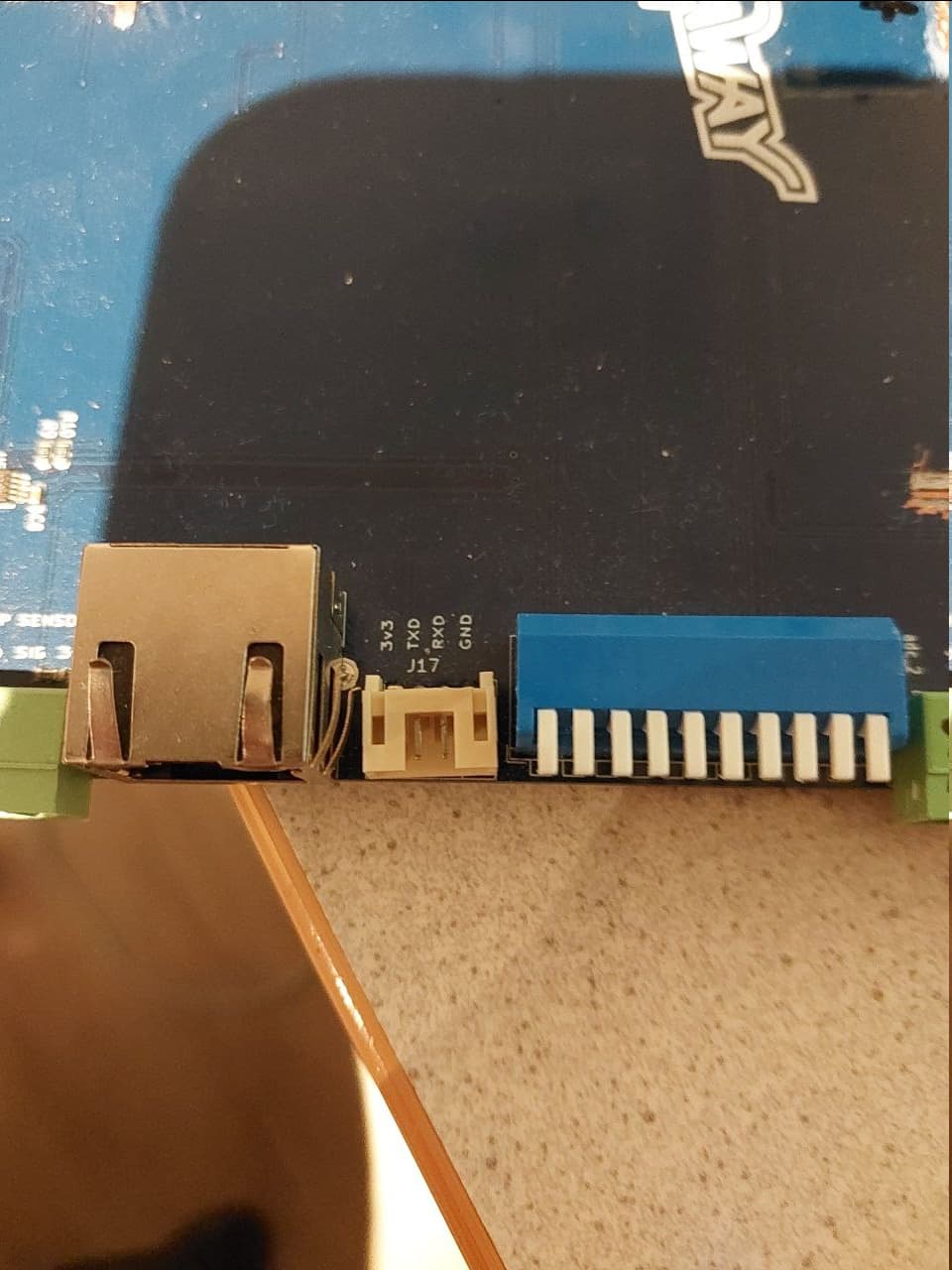
ich bin an diesen JST Stecker von meinem blauen Relayboard gegangen
Ich vermute mal das dass der MultiUART im Programm ist also der ttyAMA5
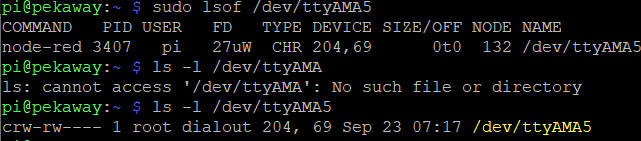
wenn ich nach tty suche wird der auch angezeigt.
bei fuser zeigt er mir das an
 d
d
Das sind die Befehle diee ich hier gelesen habe, aber mir sagen die nix
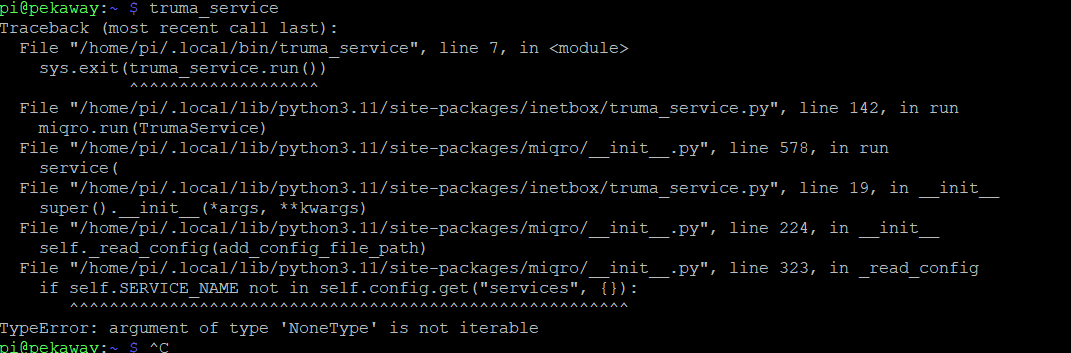
Bei Truma-Service bekomme ich das angezeigt.
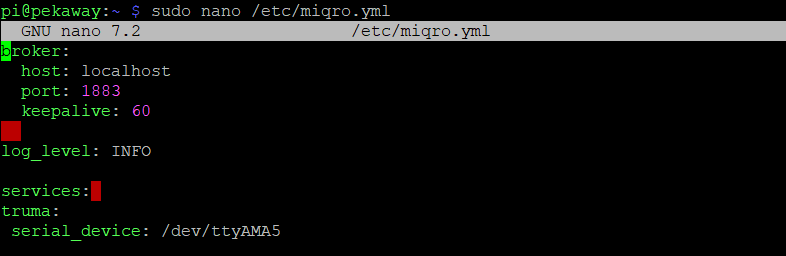
in meiner miqro.yml steht das drin
was kann ich tun um weiter zu kommen.
Gruß Arno
Hallo Arno, ich hatte den AMA5 in Node-Red Flow “Connections” disable selected nodes/appearance gesetzt.
https://pinout.xyz/pinout/uart
Verwendet für Truma: J12 = UART5 PIN 33 (GPIO13)+PIN 32 (GPIO12) → prüfen ob der dorthin geht.
In der config.txt konfigurieren:
/dev/config.txt
[all]
#dtoverlay=vc4-fkms-v3d
dtoverlay=w1-gpio
enable_uart=1
#dtoverlay=uart2
#dtoverlay=uart3
#dtoverlay=uart4
dtoverlay=uart5
Gruß, Stefan
check mal den seriellen Port mit einem Terminal Programm:
minicom Terminal:
sudo apt-get install minicom
Port zuweisen für Test:
sudo minicom -b 9600 /dev/ttyUSB0Abfrage:
# UART0 (PL011): /dev/serial0 → /dev/ttyAMA0
# Linux kernel serial console
# GPIO 14: TXD0
# GPIO 15: RXD0
# UART1 (miniUART): /dev/serial1 → /dev/ttyS0
# disabled
#enable_uart=1
# UART2 (PL011): /dev/ttyAMA1
# GPS UART
# GPIO 00: TXD2
# GPIO 01: RXD2
dtoverlay=uart2
# UART5 (PL011): /dev/ttyAMA2
# Tester UART
# GPIO 12: TXD5
# GPIO 13: RXD5
dtoverlay=uart5
After merging Bookworm changes from current arm64 branch the device enumeration changes and there are UART warnings in the kernel log:
UART GPIO pins kernel device connected to
UART0 14/15 ttyAMA1 tester console
UART2 00/01 ttyAMA2 GPS
UART5 12/13 ttyAMA0 Linux console
To make sure that the issue is not caused by our customization, I installed official Raspi OS Lite/Bookworm image on a Pi 4 Model B. After adding the lines to /boot/firmware/config.txt & rebooting, I was able to reproduce the issue.
Gemessen Ports auf RPI 4:
NEXION RJ45 RX 9 (/8 TX Display/GPS
UART1 J16 RX 8 (GPIO14)/10 (GPIO15) TX
UART4 J11 RX 21 (GPIO9)/22 TX
UART5 J12 RX 28 (GPIO1)/30 TX (GPIO LIN BUS Truma
Hier steht auch noch etwas zu den seriellen RPI Ports und Terminal Prg:
Probiere ich demnächst mal aus, bin zur Zeit wieder mit dem ESP32 zugange, läuft jetzt seit 2Tagen ohne sich abzumelden, wenn das weiter funktioniert ist mir das auch lieber, als direkt auf die Himbeere. Ist weniger Arbeit beim Update
Die Platine die ich gebaut habe kann beides